While Krakow turned out to be an enchanting city our main purpose for coming to this area was to visit Auschwitz-Birkenau. Located in Oswiecim less than two-hours by bus from Krakow is the site of unspeakable horrors where an estimated 1.1 million innocent people were murdered from 1941-1945.
Although a reservation is required, a guide is not needed to visit the site, however Jon and I opted to book a 3.5 hour English guided tour for about $10 each. It somehow seemed inappropriate to spend time at this site without bringing a human element into our visit who could properly convey the emotional aspect. Our guide grew up in this area and his mother has been a guide since shortly after the museums opening. It was a part of him and we were glad to have access to his knowledge.
Auschwitz consists of two camps, Auschwitz I and Auschwitz II (Birkenau). The tour starts at Auschwitz I where the public transportation arrives. It is also home to the infamous Arbeit Macht Frei (Work Sets You Free) gate and several museums and exhibits. Before WWII this section of the camp was used for the Polish Army. When Hitler first took over he turned it into a concentration camp for Polish political enemies. It was not until 1942 that Auschwitz became a death camp for the extermination of European Jews and others Hitler considered “undesirable”.
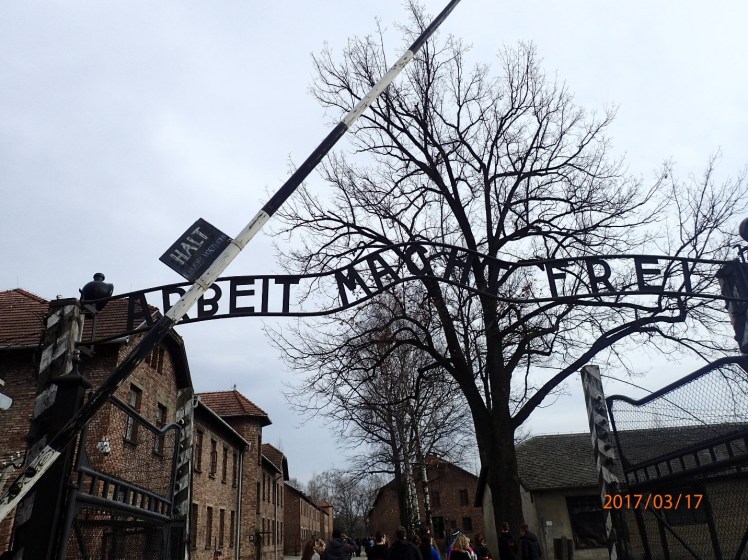 Famous entrance gate
 Auschwitz I
The Natzi were so good at hiding the true purpose of Auschwitz that the victims did not realize what was happening until the last seconds. People entered a room, were told to hang their items on numbered hooks and that they should remember their numbers. They were then moved into the “showers” and were killed by Zyklon-B gas, a cleaning agent that is lethal in high doses. It took only 20 minutes to kill 8,000 people in four gas chambers. Elevators would bring the bodies to crematoriums, manned by Jewish inmates, who would remove their gold teeth and shave their hair to be sold before cremating them. It was not unusual for a worker to discover a wife, child, parent or friend.
There is one story told by our guide of one worker encountering his mother on the way into her death in the showers. He opted to join her never letting on that they were both walking into their own deaths. Typically, these workers only survived a few months as they would die of starvation or disease, be executed or commit suicide rather than assist in more deaths.
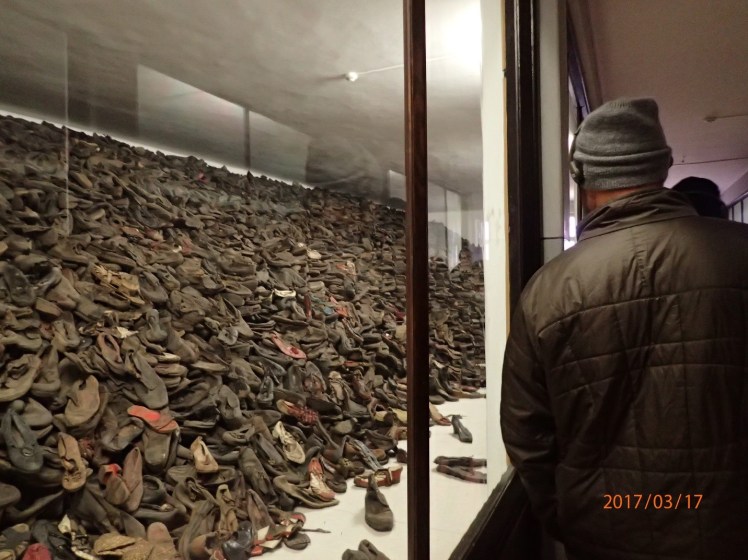 Shoes remaining from some of the victims.
There were only 7,500 survivors that the Red Army found when Auschwitz was liberated, of which 20% dies soon after. In total 3.5 million Polish Jews were murdered in Poland by the end of the war only 300,000 polish Jews had survived, less than 10% of the original population. After, many of them deported to Israel, Western Europe and the US. Today only about 10,000 Jews live in all of Poland.
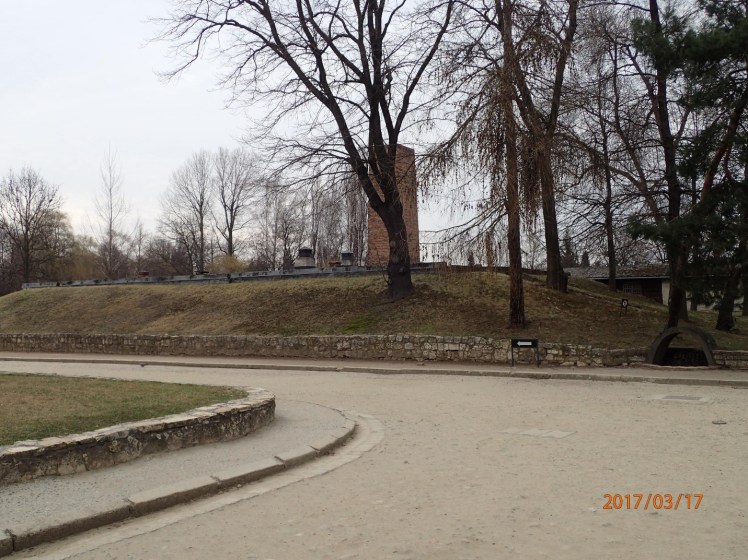 A crematorium from the outside.
Not known to many people is that Auschwitz was also used to perform horrific experiments on women and children by Dr. Josef Mengele. He was hoping to find ways to increase fertility for German mothers and the effects of starvation. The stories and photos left one pondering this man’s humanity.
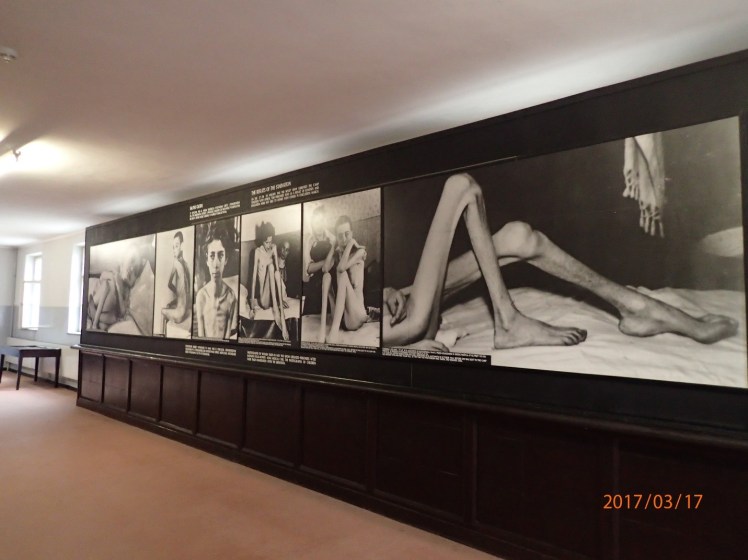 Pictures of women and children experimented on.
After a brief shuttle bus ride, we arrived at the much larger Birkenau, which is mostly outdoors. Notorious “dividing platform”. In 1941, the Nazi’s realized that Auschwitz I was too small and began building Birkenau which could hold 200,000 people. Upon entering we were confronted with the iconic Guard Tower, the train tracks leading straight through to the dividing platform.
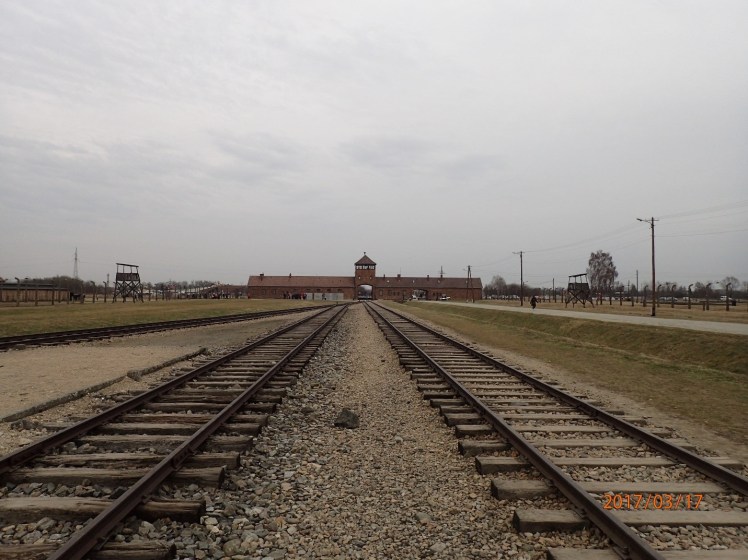 Birkenau II entrance.
Jon and I felt queasy as we stood on the dividing platform, where a Nazi doctor would stand and determine each person’s fate. If he pointed to the right the prisoner was sentenced to death, if he pointed left the prisoner would live under ghastly conditions for a little longer.
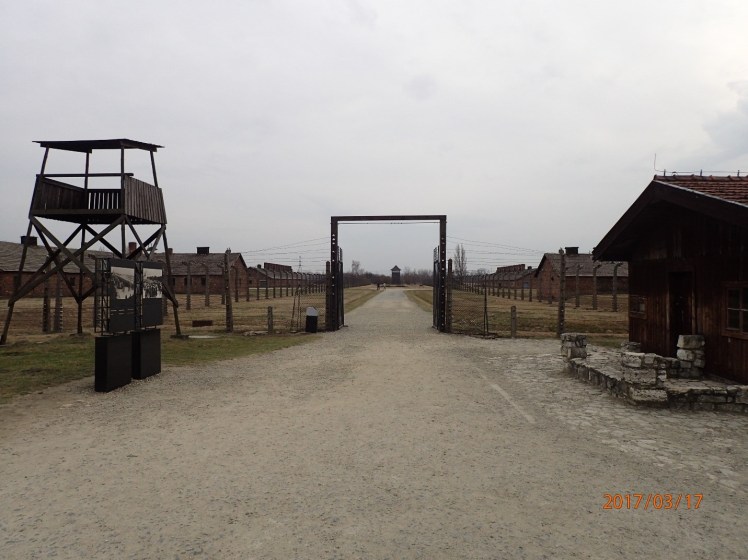 Dividing platform.
In Birkenau, we visited a children’s barracks which was particularly moving. The other prisons tried to make life a little more bearable for the children by installing a brick floor to replace the typical dirt floor and hung children’s paintings on the wall to add more color.


Children’s barracks.
Shortly after the war the camp commander Rudolf Hoss was tried and sentenced to death by hanging at Auschwitz. A hundred yards away was where the commander lived with his wife and children during the War. She is said to have described here time living there as the happies of her life. It does not even begin to sound like justice.
All around the complex there are monuments and memorials to the past. One that stayed with me after the visit was “Nations who forget their own history are sentenced to live it again.”


So moving! I don’t think I could go there, my grandfather died at Auschwitz.
LikeLike
Sorry to hear that Cisca, sending my love and prayers to your family
LikeLike