Bratislava, where the heck is that? That is exactly what we thought before we started our trip planning. Bratislava is the charming up-and-coming capital of Slovakia only an hour train ride from Vienna. Slovakia, a relative newcomer, is the eastern half of the former Czechoslovakia (75 years) but was a part of Hungry before being lost during WWI. The country is rejuvenating after gaining its freedom in 1989 from its long communist reign and in 1993 from its split from the Czech Republic, and the young residents of Bratislava are embracing this change.
Bratislava’s colorful old town on the Danube is a wonderful place to spend a day discovering cobbled streets and checking out the newly refurbished castle on the hill above town. Jon and I once again did a self-guided walk of the old town courtesy of Rick Steve’s (he has fabulous self-guided walks throughout Europe). We crossed through the last surviving tower of the old city wall, St. Michael’s gate, over what was once the city moat and landed in the traffic-free center.
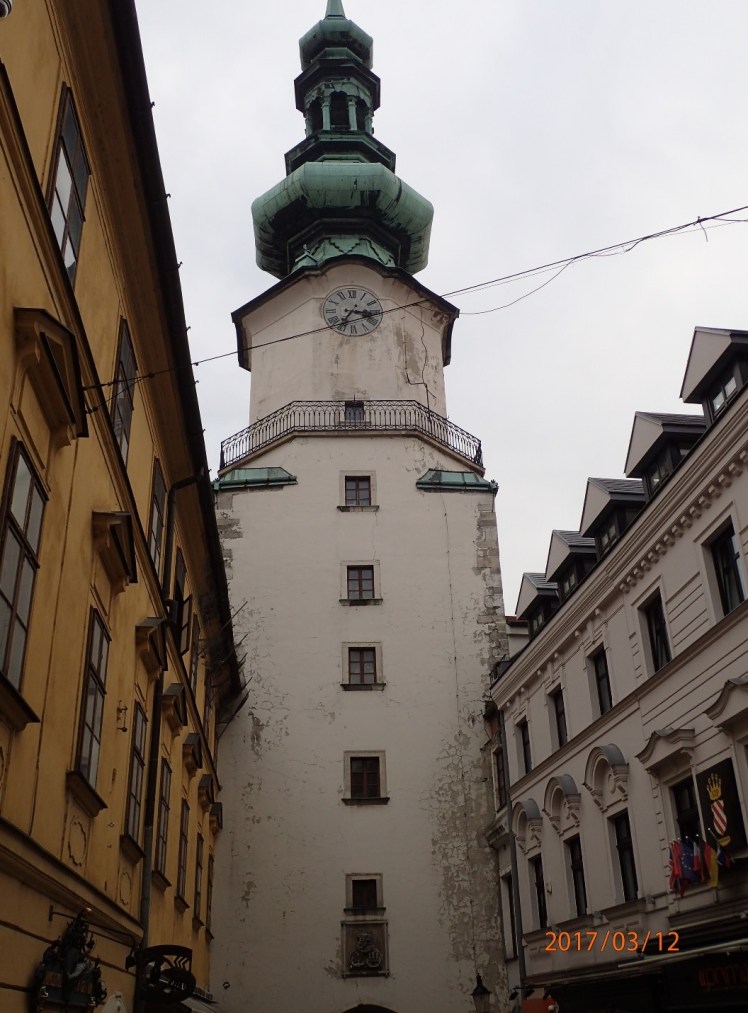
St. Michel’s Gate.
It’s hard to believe that these pretty cobbled streets were once a decrepit ghost town during the communist era. The communist saw the old town as a useless relic of the bad old days and anticipated that everyone would live in large efficient apartment buildings. We enjoyed ourselves searching for old cannon balls embedded in the buildings from Napoleon’s two sieges and searching for the various whimsical statues throughout town.
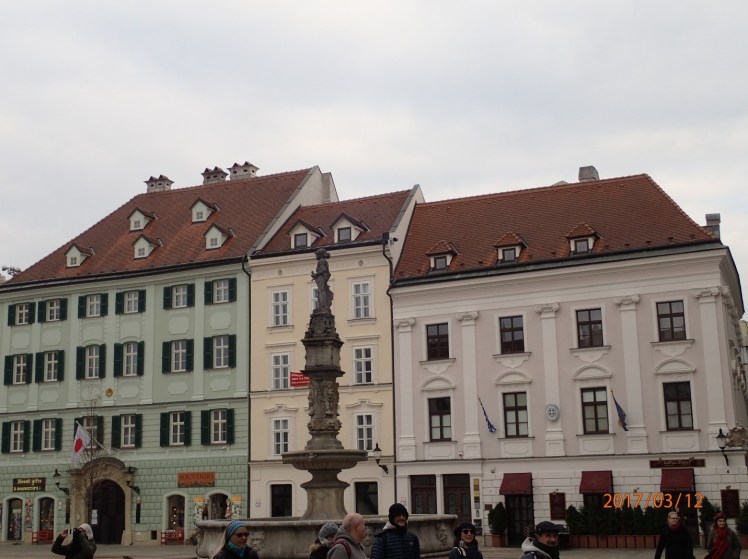
Charming Main Square (Hlavne Namestie).

Cannon ball embedded in the wall.

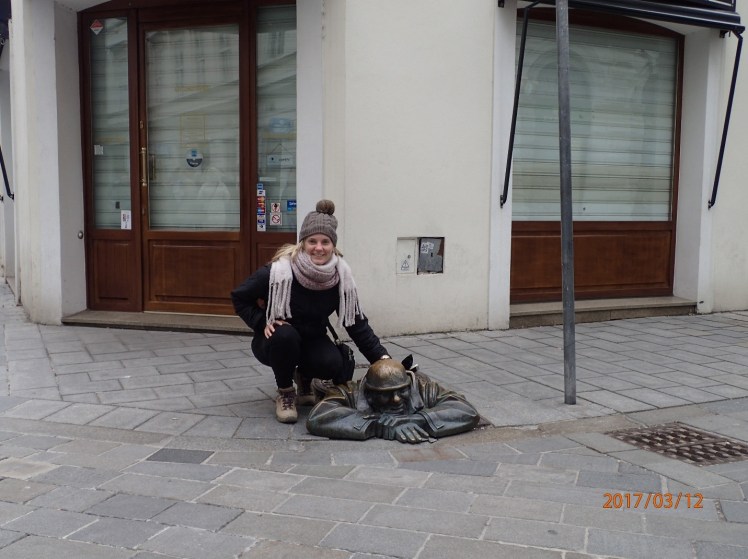
Jon with Schoner Naci a local resident and me with Cumil (the peeper).
One of the most interesting sites was the Holocaust Memorial which sits on the site of Bratislava’s original synagogue, which happens to be right next to the catholic St. Martin’s Cathedral. The memorial commemorates the 90,000 Slovak Jews that were deported to Nazi death camps. The fact that the catholic church and synagogue were located side by side illustrates the peace and tolerance that characterized Bratislava before Hitler.
Unfortunately, a highway was built directly in front of the cathedral which has seen the crowing of nineteen Hungarian kings. This church was actually built direct into the wall. Sections of the wall can still be seen near the cathedral.
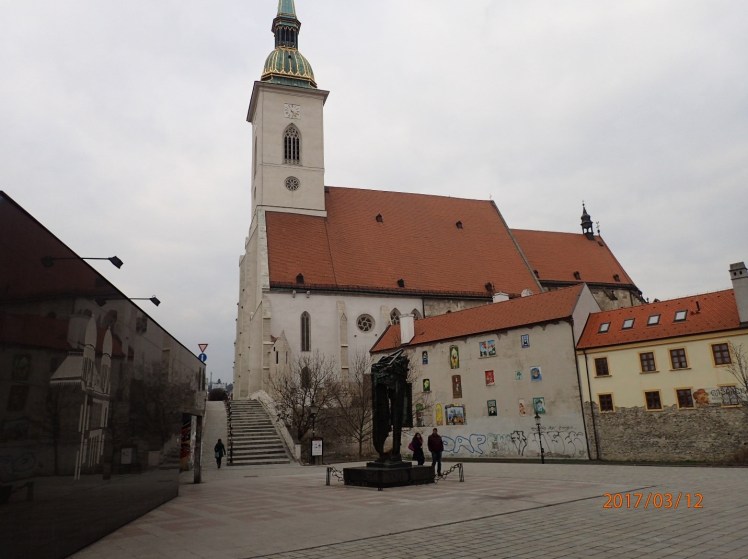
The Holocaust Memorial with St. Martin’s in the background.


Sections of the old wall.
The imposing fortress, Bratislava Castle (Hrad), watches over the city from its perch high on the hill. The castle was transformed from a military fortress to a royal residence in the 18th century. The castle was burnt down in 1811 and left in ruins for more than 150 years. Renovations have begun to turn this back into the grand palace it once was.
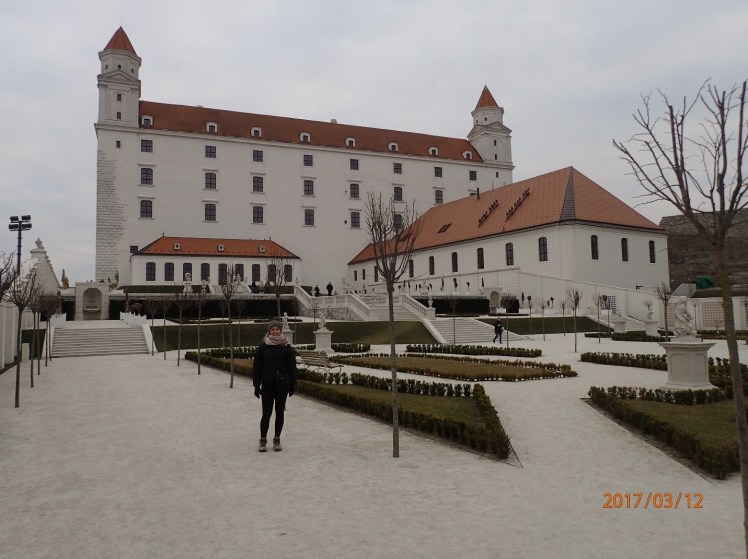
Me in the castle gardens.
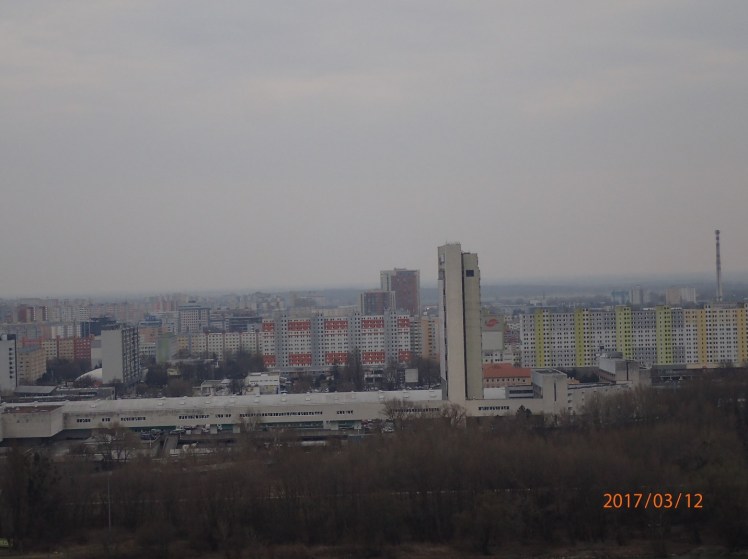
View of the soviet constructed block buildings across the river.
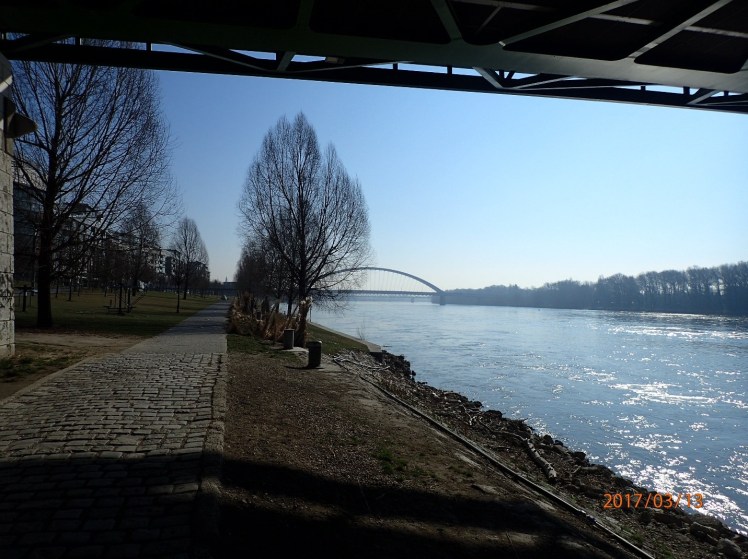
Walkway to Eurovea along the Danube.
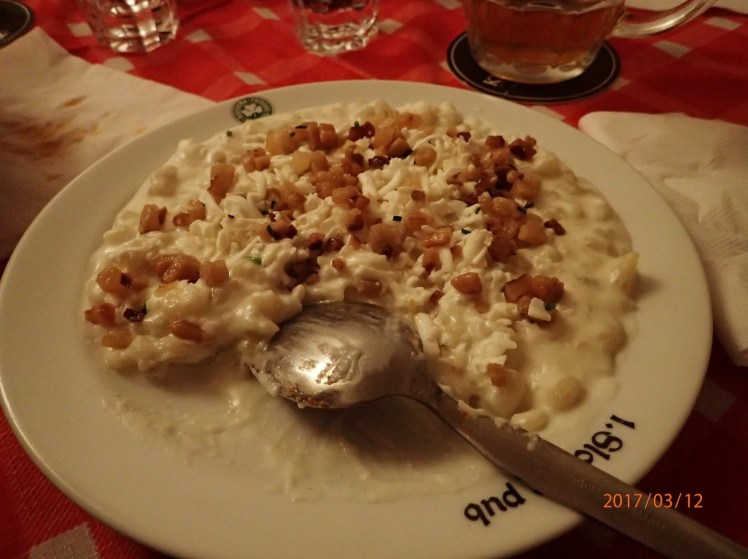
While in Bratislava we continued with our hearty dishes trying the national dish, bryndzove halusky (small potato dumplings with sheep’s cheese and bits of bacon). It was very rich and highly recommend sharing.
Where we stayed, Downtown Backpackers, we had a very large room with twin beds and a sitting area with a shared bathroom for $32 a night. The hostel was half was between the train and the downtown area making it a good location. There was also a cute little pub on the ground floor with great beer and good breakfast and lunch.


The sitting area in our room and Jon enjoying a local beer in the pub.
 Journey with Christina
Always wanted to visit it but haven’t yet made it there. One day.
LikeLike
I find the more I travel the larger my list gets!
LikeLiked by 1 person
That’s true! A never ending list as some places i also want to go back to😁
LikeLike