Krakow is a beautiful old-fashioned city with a shifting history. The city made its wealth from trade in the late 10th century. In the 12th century after an invasion ruined the city they used this opportunity to create streets in a near-perfect grid, which is still prevails today. By the end of the 18th century Russia, Prussia and Austria partitioned Poland dividing it amongst themselves. Krakow became the poor relation to Austria and struggled to gain freedom for the next century.
The real tragedy of the city occurred in 1939, when the Nazi’s overran Poland. The German’s invested heavily in construction and industrialization which opened the door for Oskar Schindler to come and take over a factory. Schindler’s original intention was to make money, however he saved more than 1,000 Jewish workers. A good example how one person can make a difference.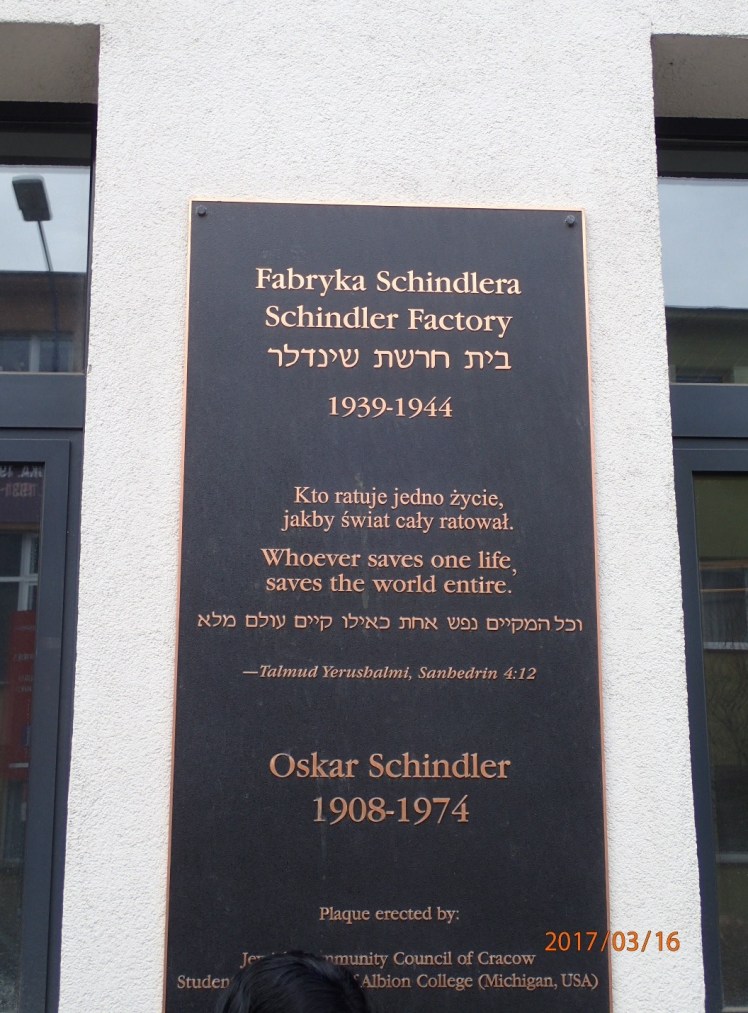 Outside the Schindler Factory Museum which has fantastic exhibits on Krakow’s WWII experience.
That evening Jon and I explored the picturesque Jewish area Kazimierz. Hard to believe this was the devastating site of the ghetto during WWII. It is now filled with romantically lit restaurants and delightful Klezmer Music. In the center of it all is the Isaac Synagogue, standing solid in its space. Jon and I grabbed an outside seat under a heat-lamp, covered ourselves with blankets and ordered warm drinks. I can’t imagine a more romantic spot then cuddling in the brisk air with music all around us. Although we did return to our hostel and slept in separate twin beds.


The romantically lit square and me enjoying a warm drink.
I hit many of Krakow’s sites while on Rick Steve’s Royal Way Walk, which is the same path that the king used to follow when he returned from a journey. The tour started outside the handsome Barbican and City walls. The original rampart had 47 watchtowers and eight gates. The moat (called Planty) has since been filled in and turned into a lovely bike path around the city walls.
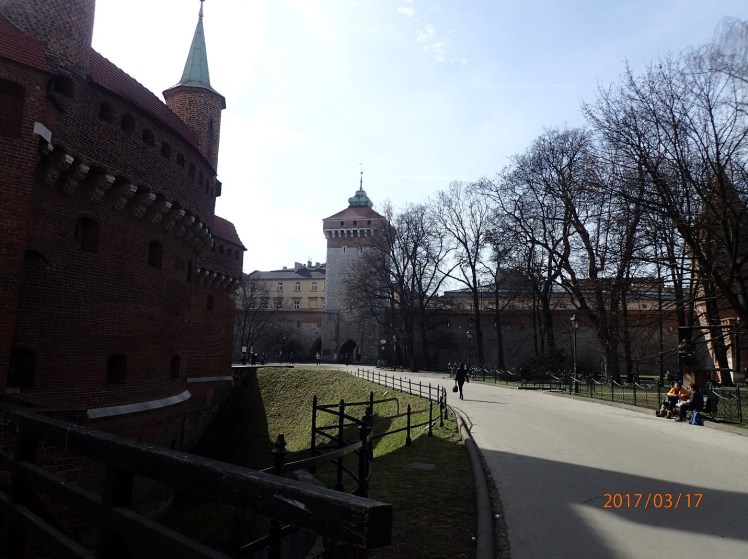
The barbican and city walls.
As I stepped through the Florian Gate I was greeted by a make-shift art gallery and the busy Florianska Street. The street combined a unique atmosphere of history and fast-food chains. The McDonalds containing a gothic cellar where you can sit and eat your Big Mac. This area also houses the Czartoryyski Museum which contains a rare Leonardo da Vinci painting. At the end of the street appears Rynek Glowny (Main Square) which houses St. Mary’s, market stalls, restaurants and other historical sites. It’s also a shopper’s haven.
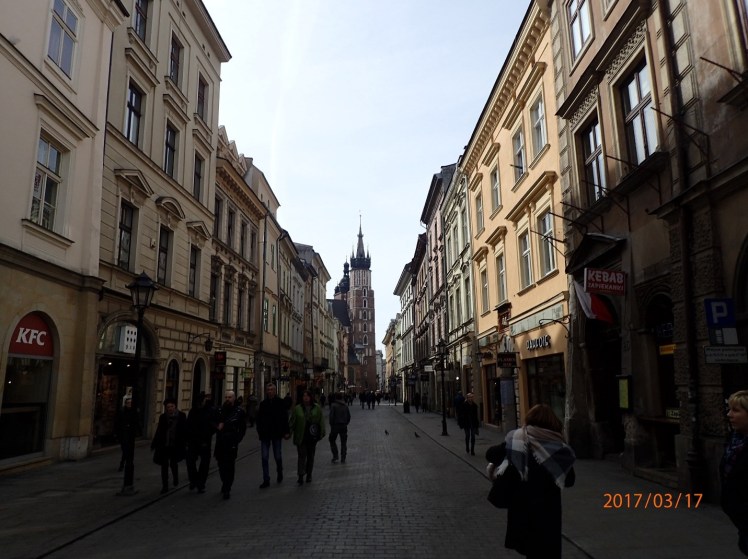
Florianska Street.
Krakow is home to some devote Catholics and Pope St. John Paul II who was born nearby and served as an archbishop in Krakow’s St Francis before being called to Rome. You can see his cardboard face hanging from a window on the Archbishop’s Palace. The same window he would stand in to casually chat to the people assembled below. Nearby is Kanonicza Street where the clergy of the city reside. Today there are 142 churches and monasteries within the city walls.
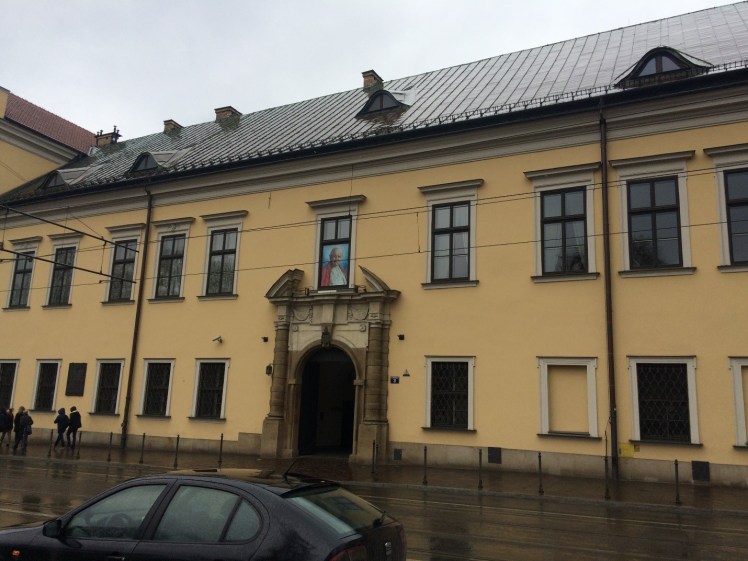
Archbishop’s Palace and Kanonicza Street.
Sitting watch above all the historical ally-ways is Wawel Hill, a symbol of Polish royalty and independence. A castle has stood here since the beginning of Poland’s recorded history. Due to time Jon and I did not get the opportunity to explore the many historical sites housed here but it gives us a reason to return one day.
Jon and I ate at a Bar Mleczny (Milk Bar), a local sightseeing experience. They are cafeteria style restaurants set up by the communists that were traditionally subsidized by the government. The tradition continues today and the food is still cheap. I had borscht (a savory beet soup) for the first time in my life. I can’t believe I had been missing out all this time! Jon tried the local dish of Bigos, a rich sauerkraut stew cooked with meat, mushrooms and whatever else is in the pantry. And of course we had some pierogis, a ravioli-like dumpling will all sorts of fillings.


Traditional Polish dumplings and borsch (beet soup).
Where we stayed, Hostel Folklor, we had a room with twin beds (Jon is starting to wonder) with a shared bathroom for $15 a night. While it was not the flashiest hostel it was in a fantastic location, the staff were extremely helpful and the price could not be beat. There was a kitchen for use, a grocery store across the street and laundry and tour services.
 Journey with Christina