Hue (pronounced “we”) has been a UNESCO World Heritage Site since 1993 and was the city of the Nguyen emperors. The one magnificent Imperial City suffered extensive damage during the wars. Thankful some historical remained after the conflict.
I started out he rainy day with a slow boat trip down the Perfume River, stopping at temples and mausoleums, while enjoying the picturesque countryside. There were many stops on this historical trip, all special in their own way. The Thien Mu Pagoda, founded in 1601, is the oldest in Hue and had long been a spot for Buddhist protest against repression. The most impressive for me was the Mausoleum of Tu Duc. Emperor Tu Duc, who ruled from 1847 – 1883, was a romantic poet but a weak king. The mausoleum was impressive as it was a small contained city. The Emperor built is quick allowing him to reside her for 16 years before his death.
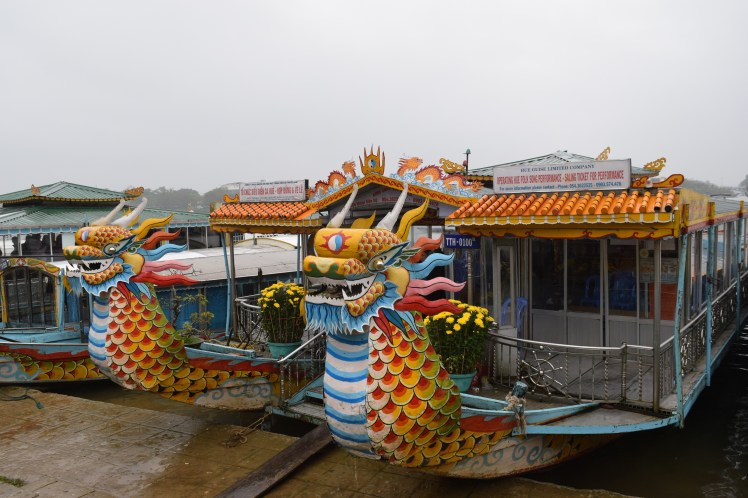
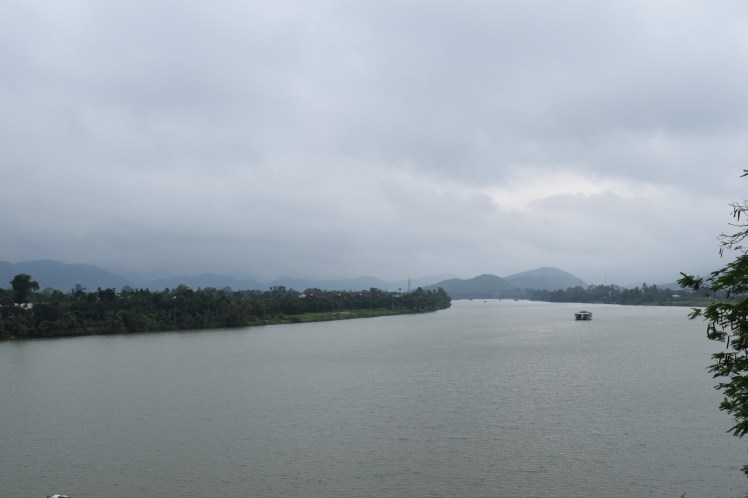
My dragon boat and Perfume River.
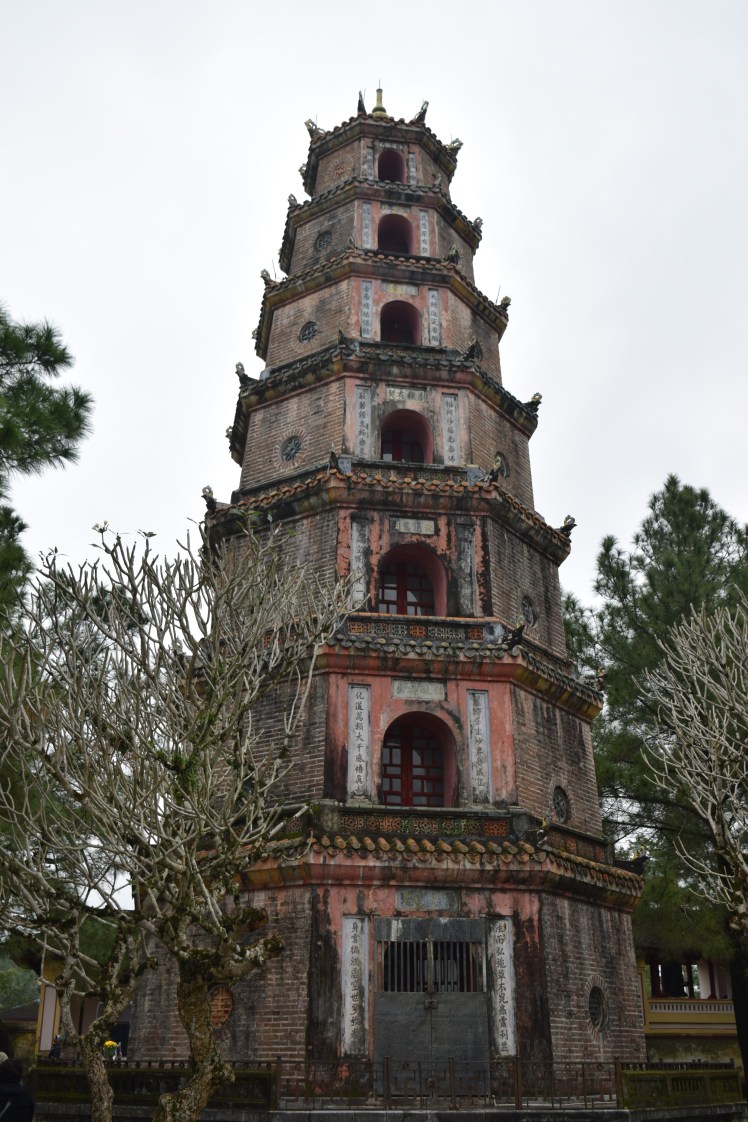
Thien Mu Pagoda
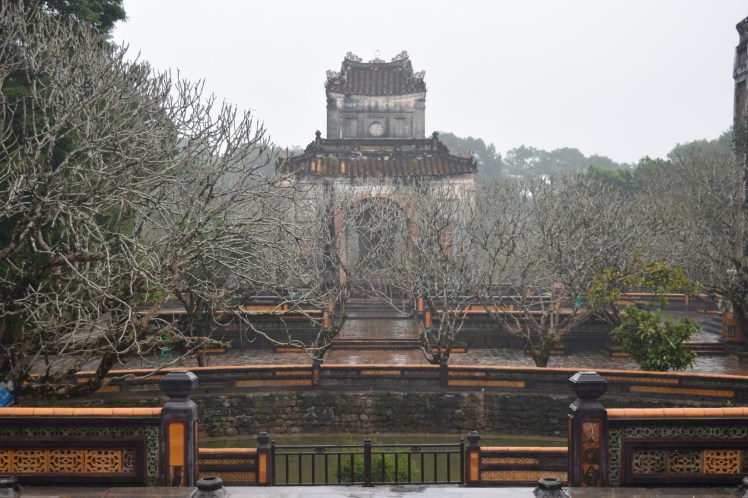
Mausoleum of Tu Duc
The most impressive site in Hue remains the walled citadel which was built by the Nguyen dynasty. In its heyday the citadel contained 148 buildings, today only 20 remain, and it still leave one awe struck at its size. The Forbidden Purple City inside the citadel was the personal domain of the emperor in which only eunuch servants and concubines were allowed in. All that remains intake is the Royal Reading Pavilion, an appealing two-tier structure surrounded by bonsai. This was my last stop of the day and it was a mistake. This glorious structure deserves a day of its own.


The walled citadel.
Where we stayed, Thanh An Guesthouse, we had a room with air con and a bathroom for $8 a night. The staff were very cheerful and helpful and the guesthouse served a good breakfast at a reasonable price.
 Journey with Christina